
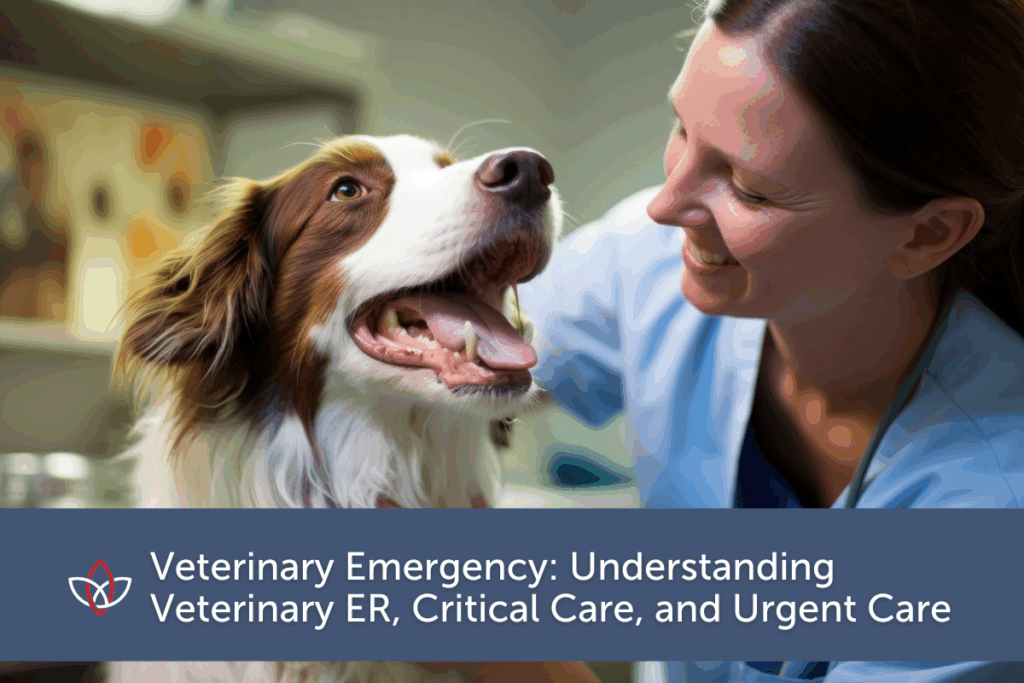
As a pet owner, knowing where to turn when your animal needs medical attention can be overwhelming. We recognize that understanding the distinctions between Emergency, Critical Care, and Urgent Care can become confusing. At Partner Veterinary Emergency & Specialty Center, we want to be sure you know what the differences are and how we determine what your pet needs.
Veterinary Emergency Room (ER): Life-Threatening Situations
Our animal emergency and critical care hospital is designed to handle immediate, life-threatening situations that require instant medical intervention. We operate similarly to human emergency rooms, with a triage system that prioritizes the most critical cases.
Symptoms Often Seen by Emergency Staff:
- Severe trauma (hit by car, serious falls, attacks)
- Difficulty breathing or choking
- Multiple/Prolonged Seizures or collapse
- Severe bleeding that won’t stop
- Suspected poisoning or toxin ingestion
- Bloat or gastric torsion (especially in large dogs)
- Eye trauma or sudden blindness
- Heatstroke or hypothermia
- Labor complications during delivery
What To Expect When You Arrive:
- 24/7 availability
- Triage system (most critical cases seen first)
- Higher costs due to specialized equipment and after-hours staffing
- Potentially long wait times for non-critical cases
- Full diagnostic capabilities (X-rays, blood work, surgery, MRI, and CT scan)
- Experienced emergency veterinarians and support staff
Veterinary Critical Care: Intensive Care for Serious Conditions
Our Critical Care specialty team provides intensive monitoring and treatment for pets with serious medical conditions that require constant supervision along with continued emergency intervention and stabilization. You can think of this as an ICU for animals. Our podcast with Dr. Pierre Charlebois dives deeper into the topic.
When Veterinary Critical Care Specialty Is Needed:
- Post-surgical monitoring for complex procedures
- Severe infections, including sepsis, requiring intensive treatment
- Multi-organ failure or dysfunction
- Cardiac conditions requiring continuous monitoring
- Severe metabolic disorders (e.g., Diabetic Ketoacidosis, necrotizing pancreatitis, hepatic lipidosis, and others)
- Respiratory failure requiring ventilator support
- Recovery from major trauma after initial ER stabilization
- Complicated cases requiring 24-hour nursing care
What To Expect:
- Continuous monitoring equipment (e.g., heart monitors, oxygen saturation)
- Specialized critical care doctors (often board-certified)
- 24-hour nursing care
- Advanced life support equipment
- Collaboration with veterinary specialists
- Potentially extended stays (days to weeks)
Veterinary Urgent Care: Non-Emergency Situations
Urgent Care fills the gap between your primary veterinarian and the emergency room. If your pet is suffering from something that seems more urgent and your primary vet is either fully booked or closed, then it might be time to visit a veterinary urgent care facility.
When To Use Urgent Care:
- Minor cuts or wounds that need stitches
- Ear infections causing significant discomfort
- Vomiting or diarrhea (without severe dehydration)
- Limping/lameness, broken toenails, and minor injuries
- Skin conditions or allergic reactions
- Eye irritation (not trauma, but redness, irritation, infections, etc.)
- Upper respiratory infections (coughing or sneezing)
- Urinary issues or Urinary tract infections (UTI)
- Minor foreign object ingestion
- Medication reactions (mild to moderate)
- Accidental/toxin ingestions (e.g., chocolate)
In the event of one of these ailments, it’s best to call your primary vet or emergency hospital before arriving so they can help determine the level of care your pet might need.
**Our Frederick location often offers drop-off hours, making it easier to get your pet the care they need, no matter how packed your schedule is.
The Bottom Line
While we all hope our pets won’t ever experience a veterinary emergency of any kind, it’s important to know the distinction between the three classifications. We hope this helps if that time comes.
Should you find yourself in a veterinary emergency, we can help!
Call our Frederick location at 301.200.8185
Call our Richmond location at 804.206.9122