
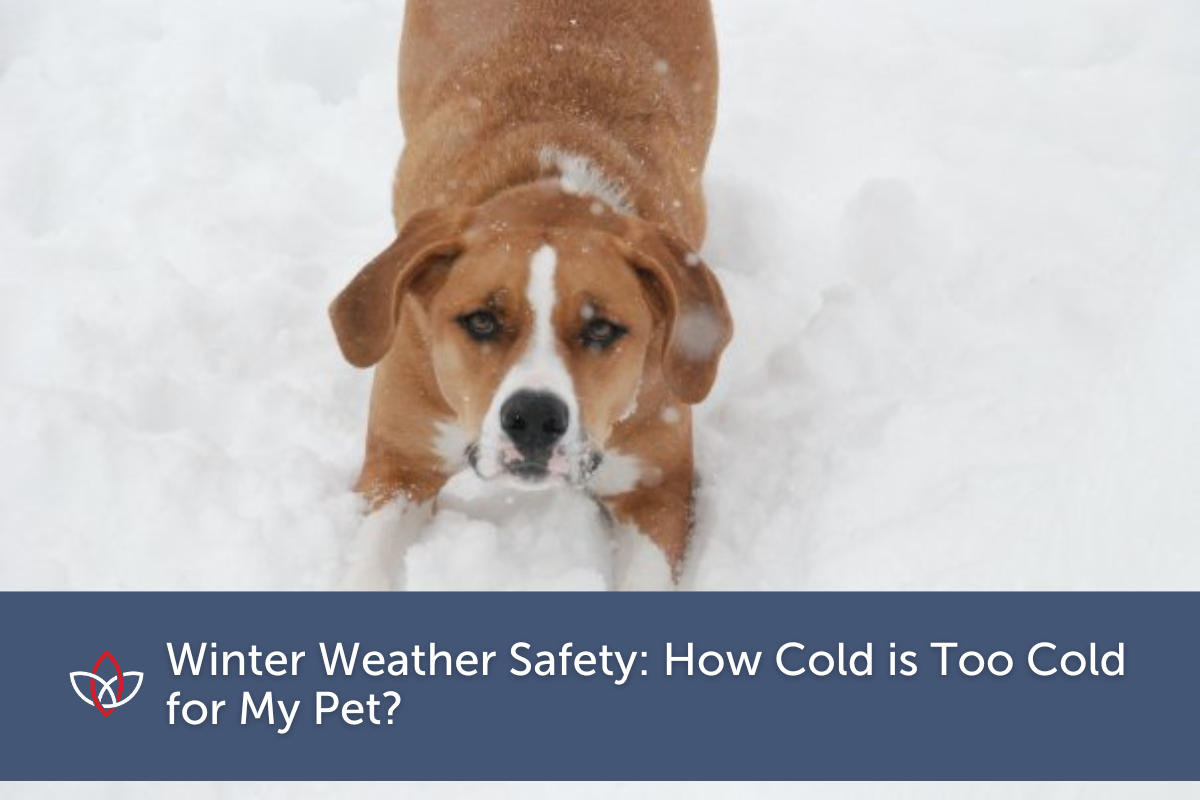
We’ve all wondered it at some point: How cold is too cold for dogs when outside? When is it too cold to walk your dog? The truth is that winter’s icy temps are just as uncomfortable for our pets as they are for us. And while fresh snowfall might look picture-perfect, the cold temperatures, ice, and harsh chemicals used to combat winter weather can pose serious risks to your pet’s health and comfort. Here are some winter safety tips for pets that you should know to keep your companions safe.
The Golden Rule: If It’s Too Cold for You, It’s Too Cold for Your Pet
Follow this simple golden rule during the winter, and you’ll keep your pet safe. While your pet’s thick fur coat might look warm, many pets are just as susceptible to frostbite and hypothermia as we are. Limit outdoor time during really cold temperatures, keeping walks brief and purposeful. Watch for signs that your pet is uncomfortable. For instance, shivering, whining, slowing down, or lifting their paws off the ground are all signals it’s time to head back inside.
So, how cold is too cold for dogs and other pets? While we strongly believe in the golden rule above, there is more to consider. According to the ASPCA and veterinary experts …
- Above 45°F: Most dogs are comfortable at this temperature, though vulnerable pets including small breeds, seniors, puppies, and those with thin coats might still feel chilled.
- 45°F to 32°F: Take caution. Keep outings short for vulnerable dogs and consider outfitting them with a warm jacket or sweater.
- Below 32°F: The risk of hypothermia and frostbite begins to climb. Prolonged exposure becomes dangerous for most dogs, regardless of breed.
- Below 20°F: This temperature is potentially dangerous for most dogs. Limit outdoor time to quick potty breaks only.
Of course, temperature isn’t the only part of the equation. Several factors determine how well your individual pet tolerates cold weather, including breed, coat type, age, and health.
Breed and coat type make a significant difference. Double-coated breeds like Huskies and Malamutes are built for frigid temperatures and can handle winter weather far better than short-haired or toy breeds who lack that natural insulation.
Age and health status are equally critical. Puppies, senior pets, and those with health conditions struggle to regulate their body temperature effectively, putting them at higher risk even in moderately cold weather.
Warning signs to bring your pets inside immediately include, whining, shivering, reluctance to walk, repeatedly lifting their paws off the ground, or tucking their tail between their legs. These behaviors tell you your pet has reached their cold tolerance limit.
Limit Snow Play
Watching your dog bound through fresh powder or your cat tentatively explore a winter wonderland is so much fun. Snow play can be wonderful exercise and enrichment, but it’s crucial to monitor your pet closely for signs of hypothermia, a dangerous condition that occurs when their body temperature drops too low.
Recognize the Signs of Hypothermia
Hypothermia is a medical emergency. If you notice any of these symptoms, bring your pet inside immediately and contact your veterinarian:
- Shivering
- Lethargy
- Muscle stiffness
- Shallow or difficulty breathing
- Pale skin
- Collapse
- Low heart rate
- Dilated pupils
Early intervention is critical. Wrap your pet in warm blankets and use warm (not hot) water bottles wrapped in towels to gradually raise their body temperature while seeking veterinary care.
Protect Precious Paws
The real question should be “how cold is too cold for dogs and their paws?” Your pet’s paw pads are sensitive and vulnerable to winter hazards. Icy roads can cause painful cuts, while salt and chemical de-icing agents can burn delicate skin. Even worse, pets naturally lick their paws after walks, potentially ingesting toxic substances that can make them seriously ill.
Before heading out for a winter walk, take a moment to massage a veterinarian-approved paw protectant into your pet’s paw pads. These balms create a protective barrier against the elements and harmful chemicals. Think of it as winter boots for pets who won’t tolerate actual booties.
Post-Walk Paw Routine
Every time you come back inside from a winter walk, make it a habit to thoroughly wipe and dry your pet’s feet and stomach. This removes any ice chunks, salt crystals, and chemical residue they’ve picked up. Keep a towel by the door dedicated to this purpose. Not only does this protect your pet from ingesting toxins, but it also prevents ice balls from forming between their toes and keeps your floors cleaner, too.
Create a Cozy Winter Retreat
Your pet deserves a warm, comfortable sleeping area, so be sure that there is no cold draft streaming in on them while they sleep. This is especially important for senior pets, who may have arthritis or other conditions that make them more sensitive to cold. Position their bed away from windows, doors, and cold floors, and consider a raised bed or extra blankets to provide insulation from chilly surfaces.
Make Winter Enjoyable
How cold is too cold for dogs? That’s a question we hope you’re confident answering for yourself after reading this. With these simple precautions, you and your pet can safely enjoy the winter season together. After all, those cozy cuddles on the couch after a snowy walk are one of winter’s greatest pleasures.
Should you find yourself in a veterinary emergency, we can help!
Call our Frederick location at 301.200.8185 Call our Richmond location at 804.206.9122