
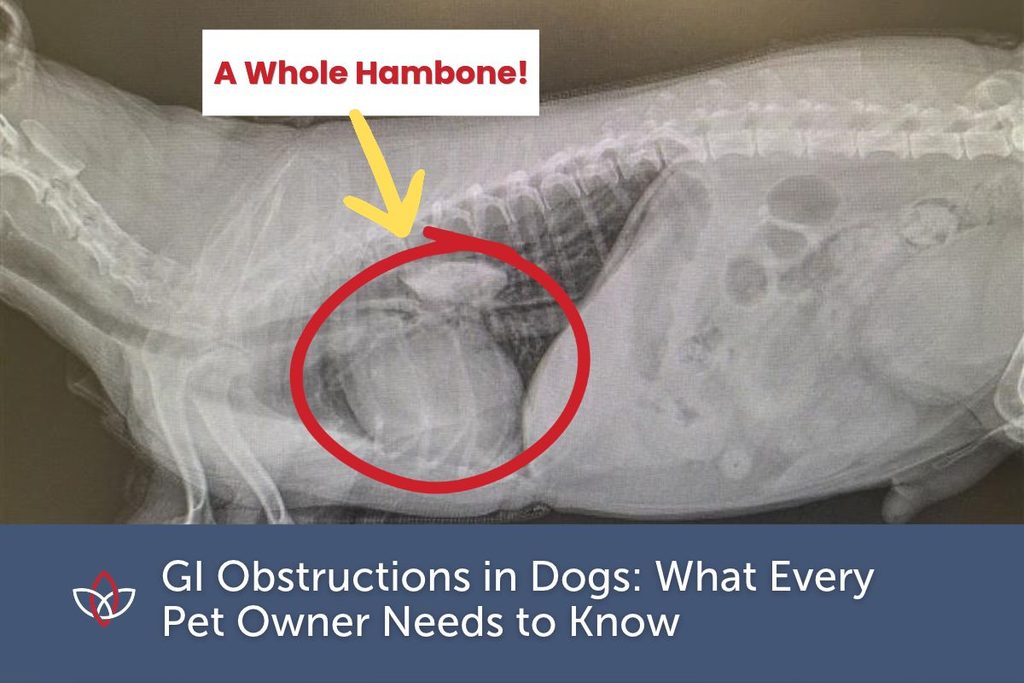
If your dog ate a sock, toy, or piece of string, it might seem harmless, but not necessarily. When your pet swallows something they shouldn’t, it can quickly become a medical emergency. Partner Emergency Veterinarian Dr. Alicia Sorum explains what pet owners need to know about gastrointestinal (GI) foreign bodies, warning signs, treatment options, and prevention.
Pets are naturally curious, and many love to chew, shred, and swallow things they shouldn’t. Unfortunately, what starts as a moment of curiosity can quickly turn into a serious veterinary emergency.
GI foreign bodies are a common reason pets require emergency veterinary care and surgery. These GI obstructions in dogs and cats can affect any breed or age, and they can become life-threatening if not treated promptly.
To help pet owners understand the risks, we spoke with Dr. Alicia Sorum, an emergency veterinarian at Partner Veterinary, about what happens when pets swallow foreign objects, how to recognize the warning signs, and what to do if you suspect your pet has eaten something dangerous.
What Is a Gastrointestinal Foreign Body in Dogs?
A gastrointestinal foreign body in dogs is any object that enters the digestive tract but cannot be properly digested or passed through the body. Common examples include socks, underwear, toys, rocks, corn cobs, fabric, and plastic.
Not every swallowed object will cause a GI obstruction in dogs. However, there is no guarantee that an object a pet has swallowed will pass safely.
“Just because your pet chews on socks but never swallows them doesn’t mean it’s not possible,” Dr. Sorum explains. “All it takes is one time of swallowing something.”
Some pets develop a habit of eating particular objects, while others may swallow something unexpectedly. Even items that seem relatively harmless can become dangerous depending on their size, shape, material, and location in the digestive tract.
Warning Signs: How to Recognize a Possible GI Obstruction In Dogs or Cats
In many cases, pet owners do not witness their pet swallowing an object. Instead, they first notice that something is wrong.
According to Dr. Sorum, vomiting is one of the most important warning signs to watch for. Other symptoms can include:
- Vomiting after eating or drinking
- Being unable to keep food or water down
- Diarrhea
- Abdominal pain or discomfort
- Changes in appetite or behavior
- Lethargy or appearing unusually unwell
- Changes in bowel movements
A pet that repeatedly vomits after eating or drinking, or cannot keep water down, needs prompt veterinary attention.
Diarrhea does not necessarily rule out an obstruction. With a partial blockage in dogs, or even a complete obstruction, material that has already moved beyond the blockage may still pass. A pet may therefore continue to have bowel movements even when a foreign object is causing a serious problem.
If your pet is vomiting and no longer passing stool, that is particularly concerning. However, do not wait for every warning sign to appear before seeking veterinary care.
How Veterinarians Diagnose Foreign Body Obstructions
When a pet arrives at an emergency hospital with suspected foreign body ingestion, the veterinary team begins by assessing your pet’s overall condition. This includes a physical examination and evaluation of vital signs, hydration, gum color, heart rate, and signs of abdominal pain. The veterinarian will also ask about the pet’s symptoms, recent behavior, and any objects the pet may have swallowed.
From there, diagnostic testing helps determine whether an obstruction is present and how seriously the pet is affected.
X-rays and Blood Work
Abdominal X-rays are an important diagnostic tool. They can help veterinarians identify certain foreign objects, evaluate the size and appearance of the stomach and intestines, and look for signs of a blockage in dogs.
Some objects, such as rocks, bones, and certain toys, may be easier to identify on X-rays than others. Fabric and other materials can be more difficult to see directly, so veterinarians also look for indirect signs of a problem.
Blood work provides additional information about the pet’s hydration, inflammation, organ function, and overall health. These results help the veterinary team determine how sick the pet is and develop an appropriate treatment plan.
In some cases, additional imaging or procedures may be needed to clarify the diagnosis.
Treatment Options: Monitoring, Endoscopy, or Surgery
Treatment depends on several factors, including the type of object swallowed, where it is located, whether it is causing an obstruction, and how the pet is feeling.
Some pets may be candidates for carefully supervised monitoring and supportive care. Others need hospitalization, endoscopy, or surgery.
When Monitoring May Be Appropriate
If the pet is stable and the veterinary team determines that immediate intervention is not necessary, they may recommend fluids, close observation, and follow-up imaging to see whether the object moves through the digestive tract.
For hospitalized patients, intravenous fluids can help correct dehydration and support normal intestinal function. Veterinarians may repeat X-rays after several hours to assess whether the object has moved and whether the pet’s condition is improving.
If the object progresses into the colon, it will often be able to pass naturally. However, monitoring should always be guided by a veterinarian, since an obstruction can worsen while a pet is at home.
When Endoscopy Can Help
Endoscopy is a minimally invasive procedure that uses a flexible scope with a camera and specialized instruments to examine the digestive tract and, in some cases, retrieve a foreign object.
It can be useful when an object is located in an accessible area, such as the esophagus or stomach. However, endoscopy has limitations. Objects located farther down the intestines may be out of reach, and some objects are difficult to grasp or remove with the instruments available.
The procedure also requires anesthesia, so the veterinarian must consider the pet’s overall health and the safest approach.
When Surgery Is Necessary
If an object is obstructing the intestines, is not moving, or is causing the pet’s condition to deteriorate, surgery may be necessary.
During abdominal surgery, the veterinarian examines the digestive tract to locate and remove the obstruction. Depending on the object’s location, this may involve opening the stomach or making an incision into the intestine.
In more severe cases, prolonged pressure from a blockage in dogs can damage the intestinal tissue. If a section of intestine has become too damaged to survive, that portion may need to be removed, and the healthy ends must be reconnected.
This is a more complex procedure with additional risks.
Dr. Sorum emphasizes that surgery is not recommended lightly, but delaying necessary intervention can allow a pet’s condition to become much more serious.
Before proceeding, the veterinary team will discuss the findings, treatment recommendations, risks, and costs with the pet owner.
Why a Perforated Intestine Is So Dangerous
One of the most serious complications of a GI obstruction in dogs or cats is intestinal perforation, which occurs when a hole develops in the intestinal wall.
The digestive tract contains large numbers of bacteria. When the intestinal wall is damaged, bacteria and intestinal contents can leak into the abdomen, potentially causing a severe infection called septic peritonitis.
This can trigger a widespread inflammatory response, damage organ function, and lead to shock. These cases can become life-threatening very quickly and require emergency treatment.
Certain foreign objects are especially dangerous because of the way they move through the digestive tract.
The Hidden Danger of String and Rope Toys
Linear foreign bodies, such as sewing thread, string, and strands from rope toys, can be particularly hazardous. When a pet swallows a string-like object, part of it may become anchored in the digestive tract while the rest continues moving forward. As the intestines attempt to move the string along, they can bunch up around it.
The tension can cause the string to cut into the intestinal wall, creating small perforations that allow bacteria and intestinal contents to leak into the abdomen.
This is why Dr. Sorum urges pet owners to be cautious about toys that fray or unravel. Avoid toys that can break into long strings or strands, and remove damaged toys as soon as they become unsafe. If your pet has swallowed string, thread, or part of a rope toy, contact your veterinarian promptly. Do not pull on string protruding from your pet’s mouth or anus.
What Happens After Foreign Body Surgery?
After surgery, pets generally remain hospitalized for monitoring and supportive care. The length of the stay depends on the procedure performed, the condition of the intestines, and how well the pet is recovering.
The first 72 hours after intestinal surgery are particularly important because complications can develop as the surgical site heals.
One possible complication is dehiscence, which occurs when the surgical incision in the intestine breaks down or separates. If this happens, intestinal contents can leak into the abdomen, creating another serious infection risk.
During hospitalization, the veterinary team monitors the pet’s comfort, hydration, and recovery, and may use ultrasound examinations to look for concerning fluid accumulation and evaluate the intestines.
Once the pet is ready to go home, following the discharge instructions is essential. And never assume that a pet is fully recovered simply because they seem energetic. Internal tissues need time to heal, and too much activity too soon can put recovery at risk.
How to Foreign-Body-Proof Your Home
Prevention is one of the most effective ways to protect your pet from a gastrointestinal emergency. Think of it as baby-proofing your home: Identify the objects your pet is most likely to chew or swallow, and make sure they cannot access them.
Dr. Sorum recommends the following precautions:
- Keep laundry out of reach. Put socks and underwear in closed hampers, and keep laundry room and bedroom doors shut if your pet tends to steal clothing.
- Secure your trash. Use a trash can with a secure lid, especially if your dog likes to investigate food scraps or discarded items.
- Choose toys carefully. Avoid toys that easily break apart, fray, or produce long strings. Replace damaged toys.
- Supervise chewing and play. Check toys regularly and remove pieces that could be swallowed.
- Keep household objects put away. Hair ties, sewing supplies, small toys, plastic items, and other tempting objects should be stored securely.
- Protect your pet when unsupervised. A properly introduced crate or another safe, pet-proofed space can help prevent access to dangerous objects when you cannot supervise.
- Pay attention to repeat behaviors. If your pet consistently targets a particular item, make removing access to it a priority.
A little prevention can save your pet from a painful emergency and potentially major surgery.
When It Comes to Foreign Bodies, Acting Quickly Matters
A swallowed object does not always lead to GI obstruction in dogs, but there is no reliable way to determine the outcome based on the object alone or how your pet initially appears.
Vomiting, an inability to keep food or water down, abdominal discomfort, and changes in behavior warrant attention. Suspected ingestion of a dangerous object or toxic substance should prompt an immediate call to a veterinary professional.
As Dr. Sorum explains, the goal is to identify the problem, understand the risks, and choose the safest treatment before a manageable situation becomes a critical emergency.
Keeping tempting objects out of reach, choosing safe toys, and knowing when to seek help can make a significant difference in your pet’s health and safety.
If you suspect your pet has swallowed something they shouldn’t, contact your veterinarian or your nearest emergency veterinary hospital for guidance. When it comes to potential foreign body obstructions, it’s always better to ask for help than to wait and see.
Should you find yourself in need of an emergency veterinarian we can help! Call our Frederick location at 301.200.8185 or our Richmond location at 804.206.9122.
For more on foreign bodies in dogs, you can listen to our full podcast on the topic: Episode 21 – When Curiosity Becomes an Emergency: Understanding GI Foreign Bodies in Pets with Dr. Alicia Sorum