
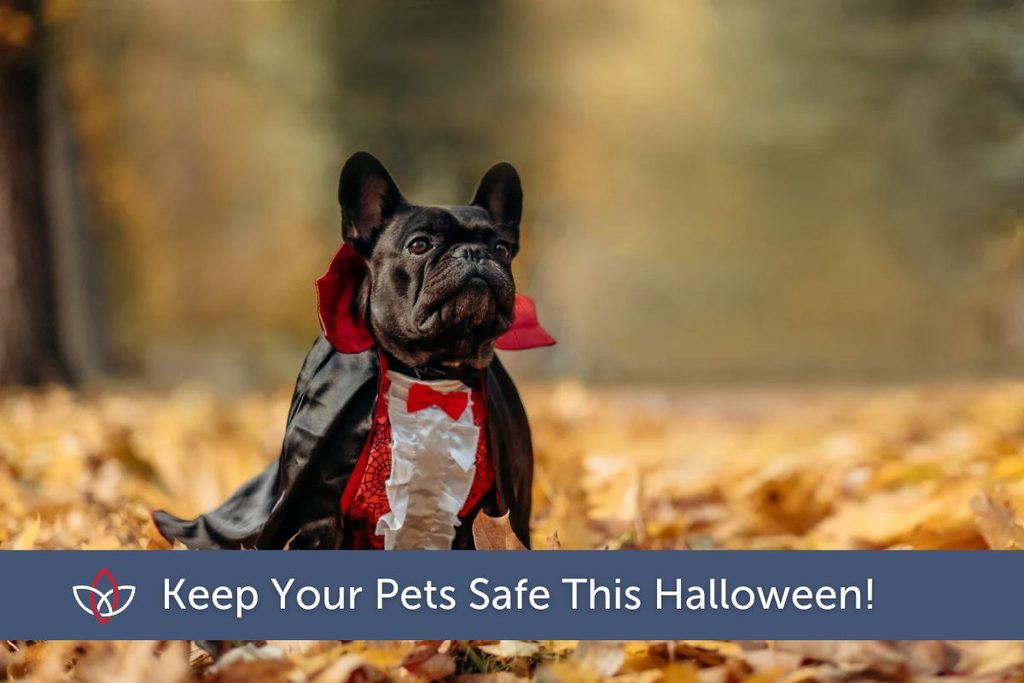
Halloween can be scary for our furry friends. Costumes, decorations, and the constant ringing of the doorbell can turn a fun night into a stressful, even dangerous, one for pets. Here are five Halloween safety tips for pets to keep your four-legged goblins out of harm’s way, including why each one matters, what to watch for, and what to do if something goes wrong.
1. No Halloween Candy!
Why it’s dangerous:
- Chocolate contains theobromine and caffeine, which pets can’t process well. Dark and baking chocolate are the most dangerous. If your dog ate chocolate, note the type and amount.
- Xylitol is a sugar-free sweetener found in candy, gum, and some baked goods. Xylitol poisoning in dogs can cause a rapid drop in blood sugar and even liver failure.
- Raisins (and grapes) can cause kidney failure in dogs, even in small amounts. Call your vet right away if your dog ate raisins.
- Wrappers are a hazard, too. Foil, plastic, and sticks can cause choking, and if your dog ate a candy wrapper, it can lead to an intestinal blockage. For more on obstructions in dogs, read GI Obstructions in Dogs: What Every Pet Owner Needs to Know or listen to our podcast on GI Obstructions.
What to look for: Vomiting, diarrhea, restlessness, panting, tremors or seizures, a racing heart, increased thirst or urination, weakness, stumbling, or unusual lethargy. Also watch for empty wrappers on the floor or in the trash.
What to do: Keep candy bowls and trick-or-treat bags well out of reach, and warn kids not to share treats with the dog or cat. If your pet eats something suspicious, don’t wait for symptoms. Call your veterinarian, an emergency clinic, the ASPCA Animal Poison Control Center at (888) 426-4435, or the Pet Poison Helpline at (855) 764-7661 (consultation fees may apply). Have the product, wrapper, and your pet’s weight handy.
Be sure to read our blog post about Poison Control for Pets for more information.
2. Update Your Pet’s ID
Why it matters: With the front door opening and closing all night, it only takes a second for a nervous pet to bolt. Frightened animals can run far and fast, and Halloween is a common night for pets to go missing.
What to check:
- Collar fits snugly (you should be able to fit two fingers underneath) and isn’t frayed.
- Pet ID tags are legible and show your current phone number.
- Microchip registration is up to date with your current contact information. A chip is only helpful if the database has the right number.
What to do if your pet gets out: Search right away, check nearby hiding spots, call your microchip company to flag your pet as missing, and post on local lost-pet groups. Even better, keep pets securely behind a closed door or gate during peak trick-or-treating hours so they never get the chance.
In addition to these Halloween pet safety tips, you can check out our blog, How to Find a Lost Pet for helpful information.
3. Decoration Safety
Why it’s dangerous: Decorations are exciting, new, and often very tempting to chew, swat, or knock over.
- Candles and jack-o-lanterns can burn curious noses and paws, and a wagging tail or swatting cat can tip a flame and start a fire.
- Glow sticks contain a liquid that tastes terrible and can cause drooling, vomiting, and mouth irritation if a pet chews one open. It’s usually not serious, but it’s very upsetting for your pet.
- Other decorations such as fake cobwebs, plastic spiders, small props, and light-up items can cause choking, intestinal blockages, or entanglement. Electrical cords can lead to mouth burns or shocks if chewed.
What to look for: Drooling, pawing at the mouth, gagging, vomiting, loss of appetite, burns or singed fur, or chewed cords and decorations.
What to do: Keep decorations high and out of reach, and consider battery-operated flameless candles in your jack-o-lanterns. Tape down or cover cords.
4. Costume Guidelines
Not every pet enjoys dressing up, and that’s okay. If your pet is a good sport, follow these rules:
- No small pieces. Buttons, bells, and bows can be chewed off and swallowed, causing choking or blockages.
- Don’t restrict sight, breathing, or movement. Costumes that cover the eyes or ears, fit tightly around the neck, or limit walking can cause panic, overheating, or injury.
- Never leave them unsupervised in costume. A costume can snag, tangle, or be chewed apart in minutes.
What to look for: Panting, hiding, freezing in place, trying to scratch or pull the costume off, pinned-back ears, tucked tail, or any sign of distress. Also check for chafing, redness, or trouble breathing.
What to do: Try the costume on well before Halloween and keep it short and positive with treats. If your pet seems unhappy, take it off. A festive bandana or collar accessory is a great low-stress alternative.
5. Create a Safe Space
Why it matters: The doorbell, strangers in costumes, and constant activity can cause serious anxiety, and anxious pets are more likely to bolt, hide, or act out defensively.
What to look for: Pacing, panting, trembling, barking or howling, hiding, drooling, excessive licking, destructive behavior, or unusual aggression.
What to do: Set up a quiet room away from the front door with a comfy bed, fresh water, favorite toys, and a chew or puzzle toy. Play soft music or a white noise machine to muffle the commotion, and check in on them regularly. If your pet struggles with anxiety every year, talk to your veterinarian ahead of time about additional options.
Make Halloween Fun and Safe
When it comes to Halloween safety for dogs and cats, a little planning goes a long way. Secure the treats, update the ID, rethink the decorations, choose costumes carefully, and give your pet a calm place to relax. That way, everyone in the family can enjoy a happy Halloween!
Should you find yourself in need of an emergency veterinarian, we can help!
Call our Frederick location at 301.200.8185
Call our Richmond location at 804.206.9122